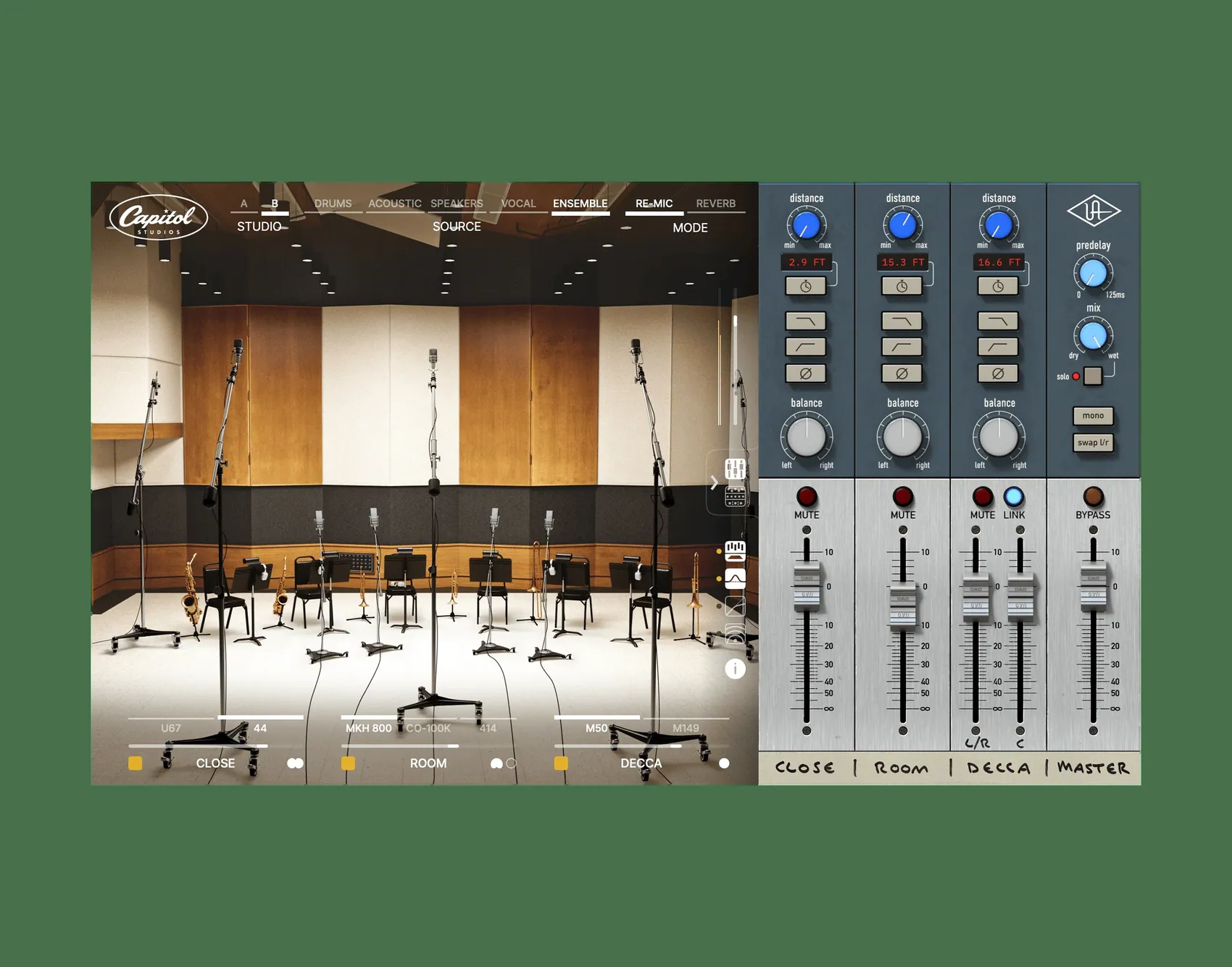
Studios A and B, historic microphones, echo chambers and adjustable distances: how far can modelling of these legendary spaces go?
The promise: working inside Capitol's legendary rooms
Universal Audio offers access to part of the acoustic signature of the famous Capitol Studios directly inside a workstation. The plug-in models Rooms A and B, their microphones, echo chambers and selected elements of the analogue signal chain.
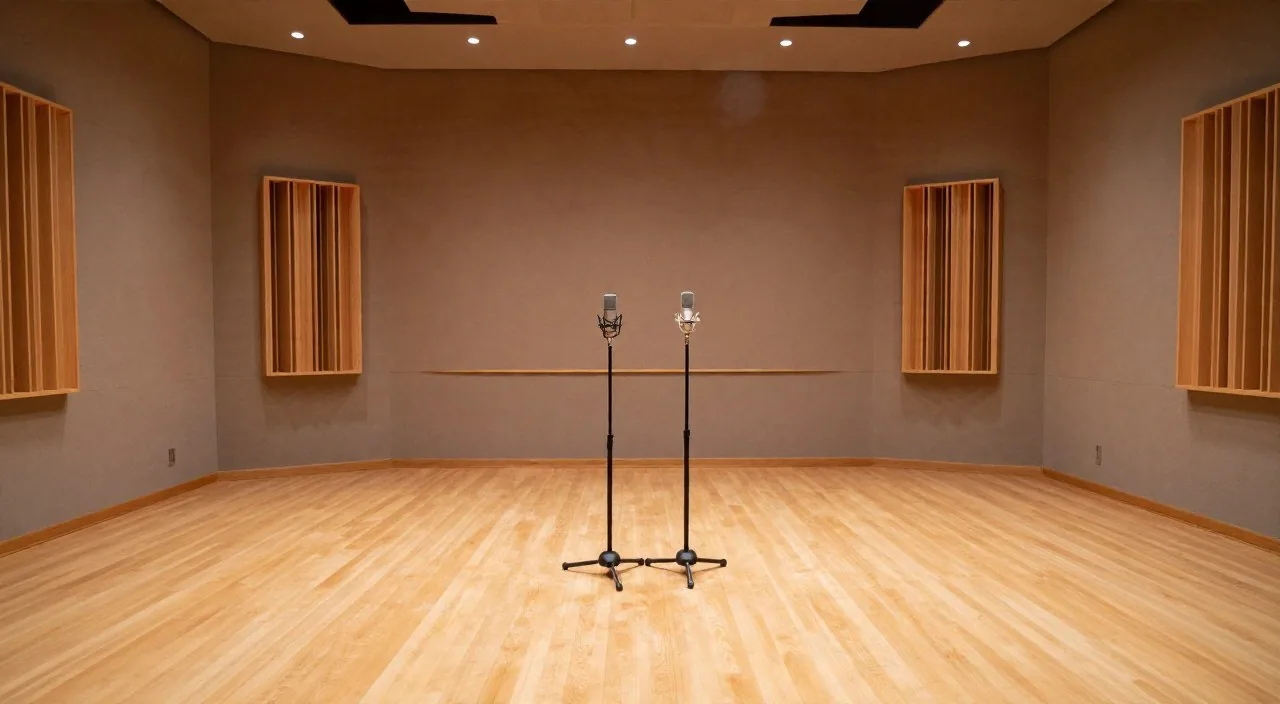
An approach that goes beyond conventional reverb
The concept is not simply about choosing a reverb time. Microphone placement within the room, configurations for ensembles and the character of recording chains all contribute to the result. For strings, vocals or virtual percussion, this could help create a convincing shared acoustic space.
Remembering Ocean Way Studios
The first generation of Ocean Way Studios had already impressed us, particularly because it let users explore microphone types and distances. Capitol Studios continues that approach to recreating prestigious acoustic spaces, with a different environment and further possibilities.
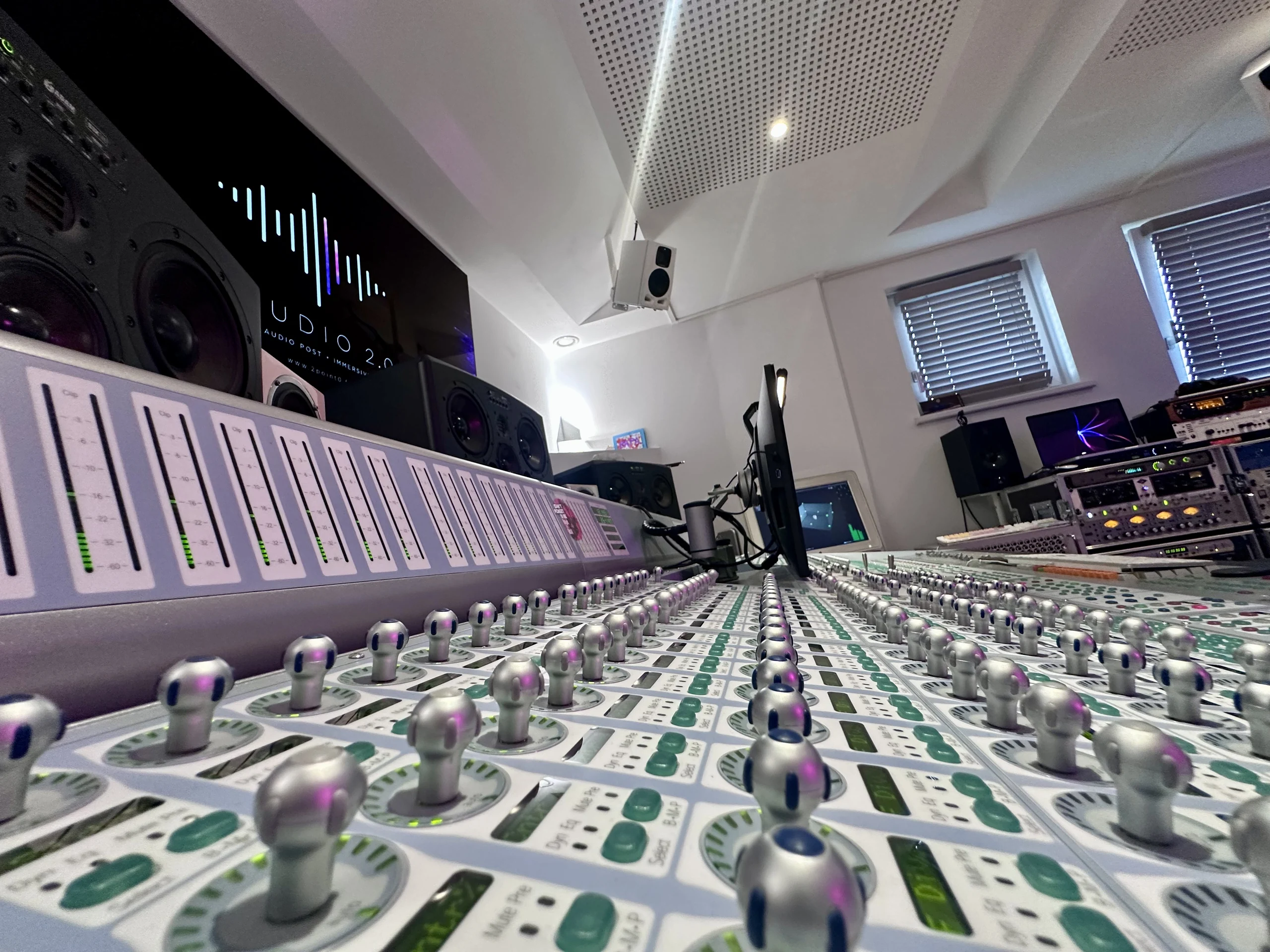
Our reference points at Studio 2.0 are demanding
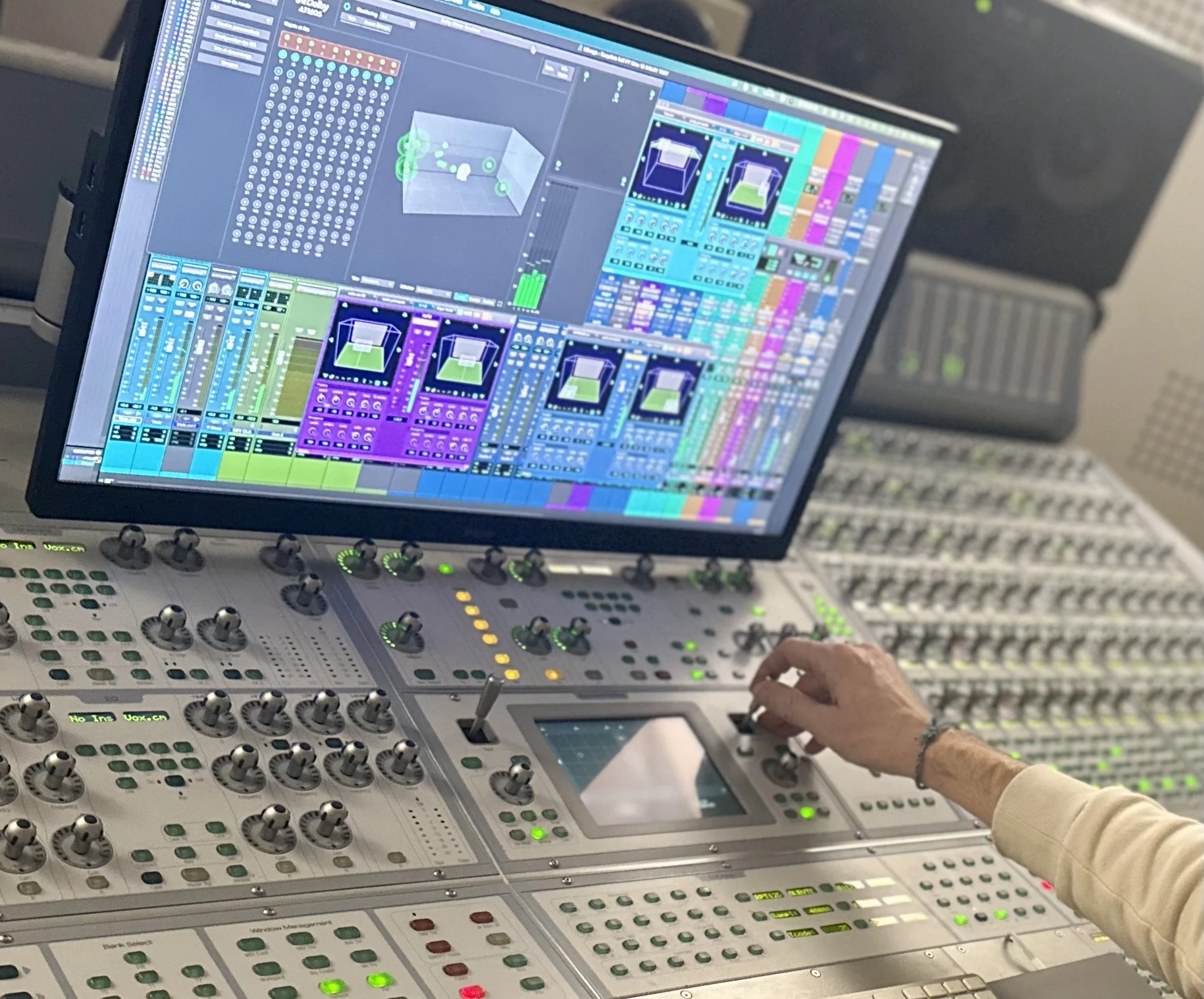
We already use numerous native Universal Audio and UAD DSP processors. For surround film-score mixing, one of our references remains Audio Ease Altiverb, especially Altiverb 8 XL for immersive workflows up to Dolby Atmos. These are not exactly the same philosophy: modelling a tracking room to build a sound and using multichannel convolution serve different needs.
Studios A and B and their microphones: more than a reverb preset
Dynamic Room Modeling allows microphones to be moved virtually inside Studios A and B, changing the perceived distance. UAD describes two distinct modes: Reverb preserves the original source while adding ambience; Re-Mic aims to recreate the overall characteristics of the microphones and room. For a source recorded too dry, this may help restore a feeling of depth—while remaining a simulation.
Particular appeal for orchestral instruments
The plug-in notably includes Decca Tree microphone configurations for strings, brass and choirs, as well as four historic echo chambers beneath the Capitol tower. Console and integrated processing features, including 1176LN and LA-2A emulations, complete the signal chain. What interests us is the relationship between direct timbre, early reflections and depth: a critical issue when mixing orchestral samples with acoustic recordings.
What about surround and Dolby Atmos mixing?
We value native UAD and DSP plug-ins, but a virtual tracking environment should not be confused with a dedicated multichannel reverb. For our film-score mixes in 5.1, 7.1 and Dolby Atmos, Audio Ease Altiverb 8 XL remains an important reference. Our Capitol Studios test will therefore look at its usefulness as a stage of spatialisation and tonal colour, without assuming it replaces immersive-space management tools.
The verdict comes after listening
The plug-in runs natively without requiring UAD DSP and is available, among other formats, in AAX on Mac. We would like to compare it on orchestral strings, a solo voice and an acoustic piano. The marketing promise is appealing; what matters is how that room translates within a real mix, especially when a project also needs a surround deliverable.
Direct link to the official website, without an intermediary store.
Official source & information
Official information from the manufacturer: www.uaudio.com
Want to take your project further?
Music composition, production, sound design, stereo and Dolby Atmos mixing, or individual coaching: tell us about your project.
Contact Studio 2.0Explore individual training · Explore our production services
 STUDIO 2.0 · SURROUND MIXINGGo further with surround mixing.Master 5.1 and 7.1 mixing with personalised training on a real multichannel studio system.ONE-TO-ONE TRAININGEXPLORE SURROUND MIXING TRAINING