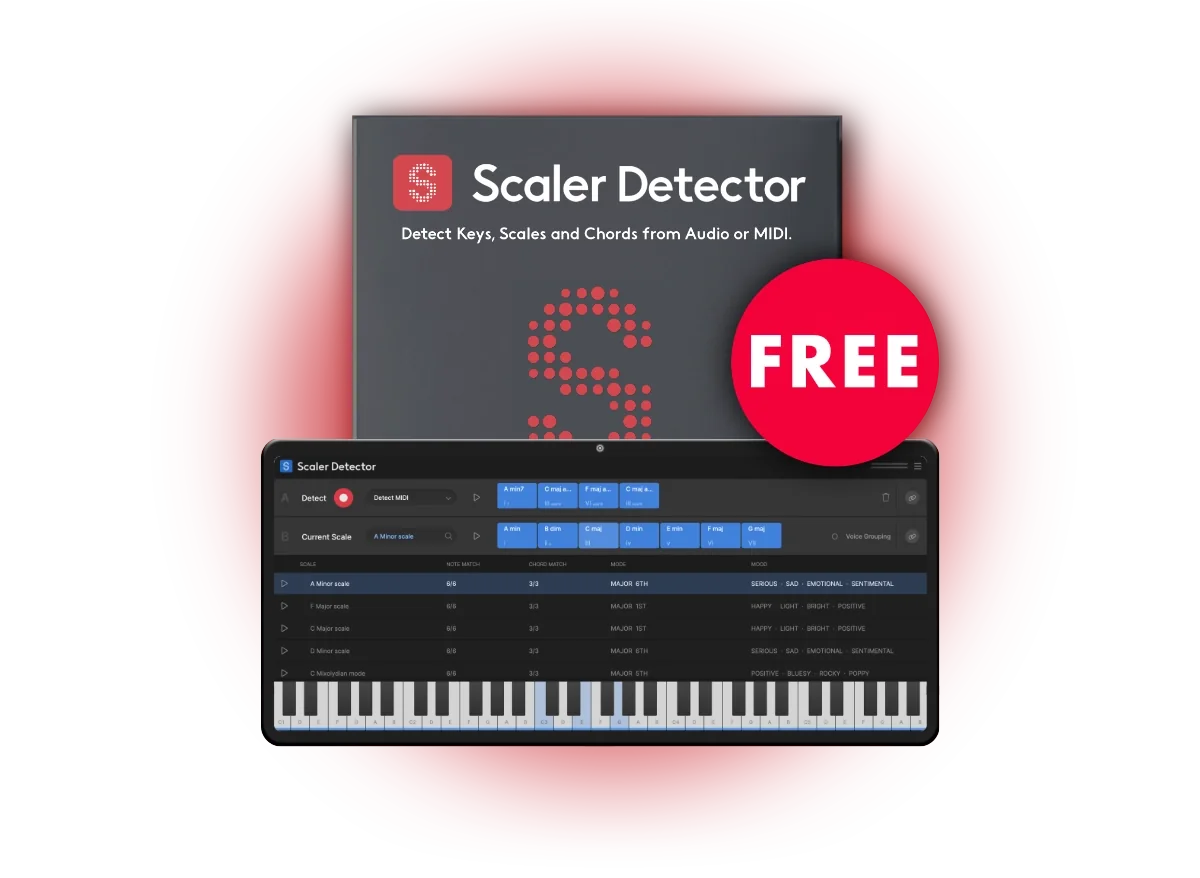
A free AAX plug-in that analyses audio and MIDI to reveal chords, scales and keys: useful for arranging and music education. We explore the tools, production choices and practical implications behind this announcement, with a focus on what matters in a real studio.
Audio, MIDI and real-time chord analysis
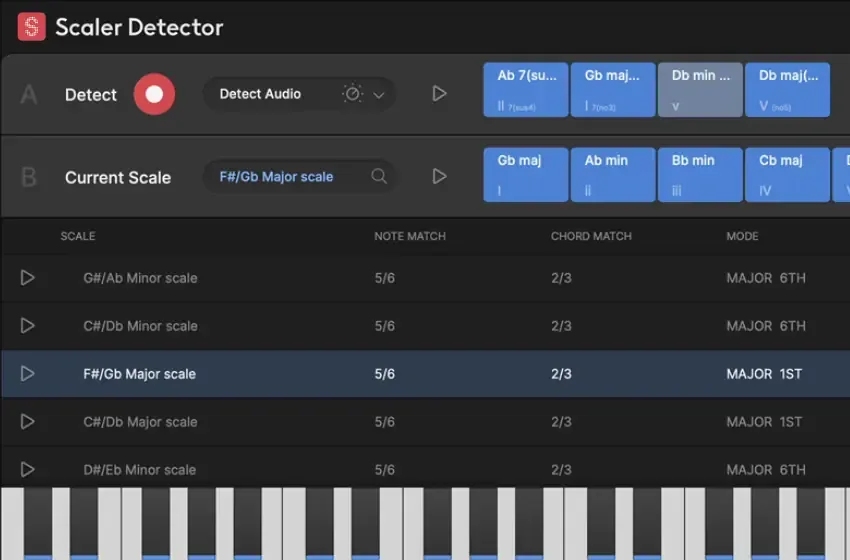
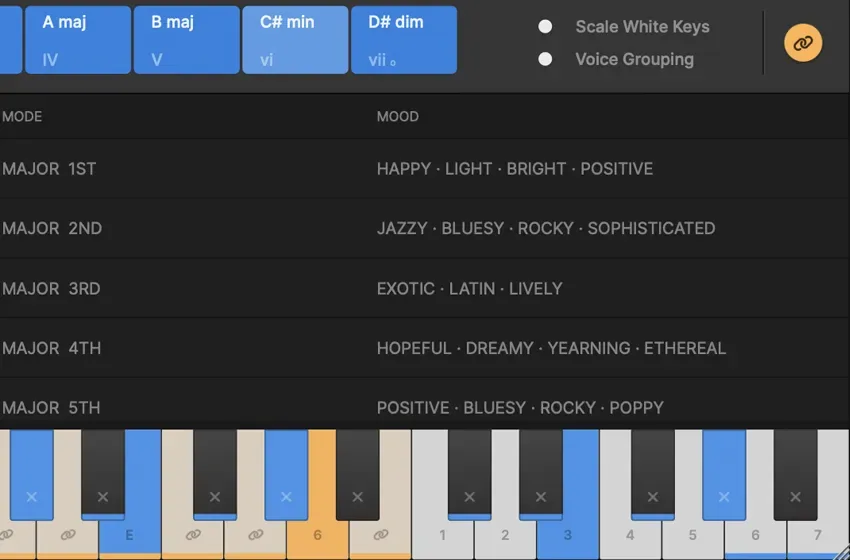
Scaler Detector can identify likely keys, scales and chords from incoming audio or MIDI, providing a quick reference during production. Support for AAX is particularly welcome for users working in Pro Tools. As with any analysis tool, the output should be treated as a helpful hypothesis, not an unquestionable musical truth.
It is available in AAX as well as AU, VST3 and standalone formats. In Pro Tools, where the standard workflow does not include the same integrated harmonic assistance, that makes it especially useful.
A learning tool rather than an automatic answer
Understanding why a chord belongs to a key, or why it creates tension, remains the musician's task. Detection software can help visualise harmonic material and test alternatives, but context and voice-leading determine how those choices feel. Used critically, it can encourage better listening and faster learning.
Try identifying the key of a four-chord loop by ear before opening Scaler Detector. Compare the result, then transpose the progression up a whole tone. The exercise reveals the difference between identifying notes and understanding harmonic function.
How we would use it in the studio
We can imagine using the plug-in to explore an unfamiliar progression, compare harmonic interpretations or prepare an arrangement from recorded material. It is also useful when teaching the relationship between hearing, notation and practical production. The most interesting outcome is greater musical autonomy, not dependence on a detector.
We recommend it for independent producers and students alike. It is also a useful companion to our longer feature on mathematics, intervals and musical harmony.
Read also: Mathematics and music: understanding harmony, rhythm and composition
Official sources and information
Editorial analysis by Studio 2.0, based on the manufacturer’s published information and official imagery. Product specifications and availability should be checked on the manufacturer’s website.
View official source ↗ STUDIO 2.0 · ONE-TO-ONE TRAININGA different approach to composing for picture.Personalised, one-to-one training in a working studio specialising in music and sound for picture.EXPLORE THE COMPOSER TRAINING