From harmonics and frequency ratios to twelve-tone cycles, rhythmic patterns and the Tonnetz: practical maths for musicians. We explore the tools, production choices and practical implications behind this announcement, with a focus on what matters in a real studio.
This feature is for musicians, composers, guitarists and producers who want to connect harmony with hands-on practice. Starting with sound itself, and without requiring a science background, we explore ideas for arranging, film scoring and sound design. The aim is to hear, recognise and use the relationships rather than get lost in abstract proofs.
1. Sound already contains numbers
A played note is usually a combination of vibrations. A fundamental at 110 Hz may contain harmonic energy near 220, 330 or 440 Hz; these components help determine its timbre. Understanding the harmonic series explains why different instruments playing the same pitch sound unlike one another. Attack, resonance and the relative strength of partials all contribute to musical identity.
A string vibrating at 110 Hz can also carry energy around 220, 330, 440 and 550 Hz. These are not additional written notes: they help form the timbre. Their relative strength changes with the instrument, attack, plucking position, register and technique.
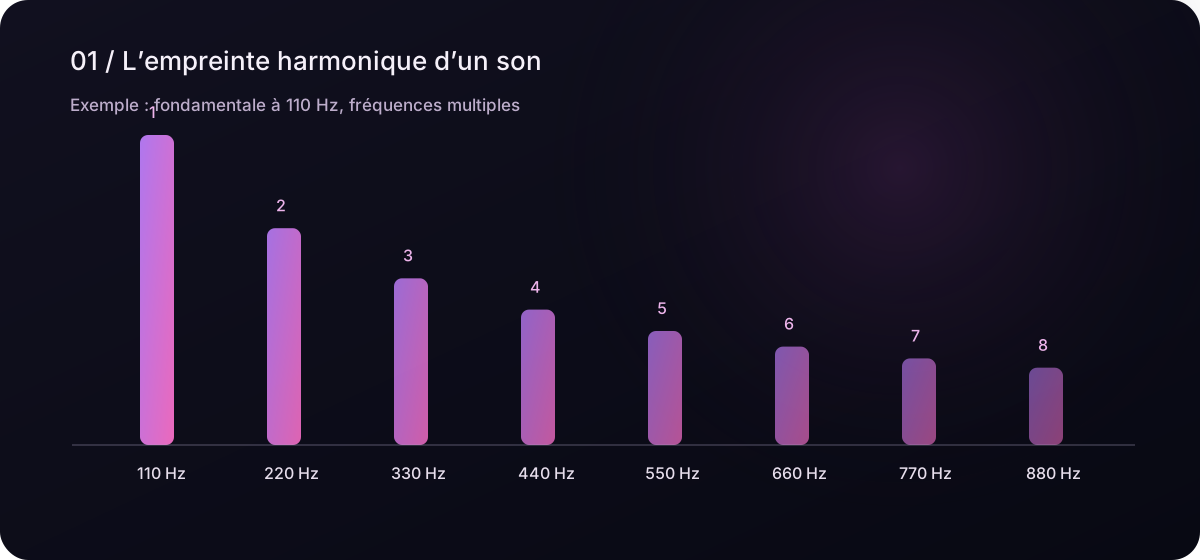
This helps distinguish pitch from timbre. Two instruments may play the same A while producing different spectra. Their pitch is similar, but the distribution of overtones, attack noise and sound evolution gives each instrument its identity.
Play an open guitar string, then lightly touch it at its midpoint to produce a natural harmonic. Alternate between the sounds: an octave appears even though the string has not changed.
2. Intervals are ratios, not simple distances
An octave corresponds to a frequency ratio of 2:1 regardless of register; a pure fifth is approximately 3:2. Twelve-tone equal temperament allows practical transposition but differs slightly from some just-intonation ratios. This helps explain why flexible-pitch ensembles sometimes adjust intervals by ear. Consonance also depends on timbre, musical context and cultural listening habits.
Simple ratios explain why some intervals share regularly spaced harmonics. Yet they do not classify every sound as universally pleasant or unpleasant: timbre, register, tuning, cultural background and musical context all affect perceived consonance.
Modern keyboards generally use twelve-tone equal temperament. It makes playing and transposing in every key practical, but its thirds and fifths do not match every pure ratio exactly. Singers and string players can adjust intonation in ways a fixed-tuned piano cannot.
For an arranger, this reaches beyond chord symbols. A slightly detuned unison, a stable fifth or a moving third in a choir can dramatically change the sense of intimacy and space.
3. The twelve notes form a cycle
In equal temperament, moving repeatedly by the same interval creates cycles of pitch classes. The circle of fifths is a familiar example: a small, repeated mathematical rule produces a practical map of keys and tonal relationships. Musicians can use the idea to organise harmony and explore modulations without turning composition into arithmetic.
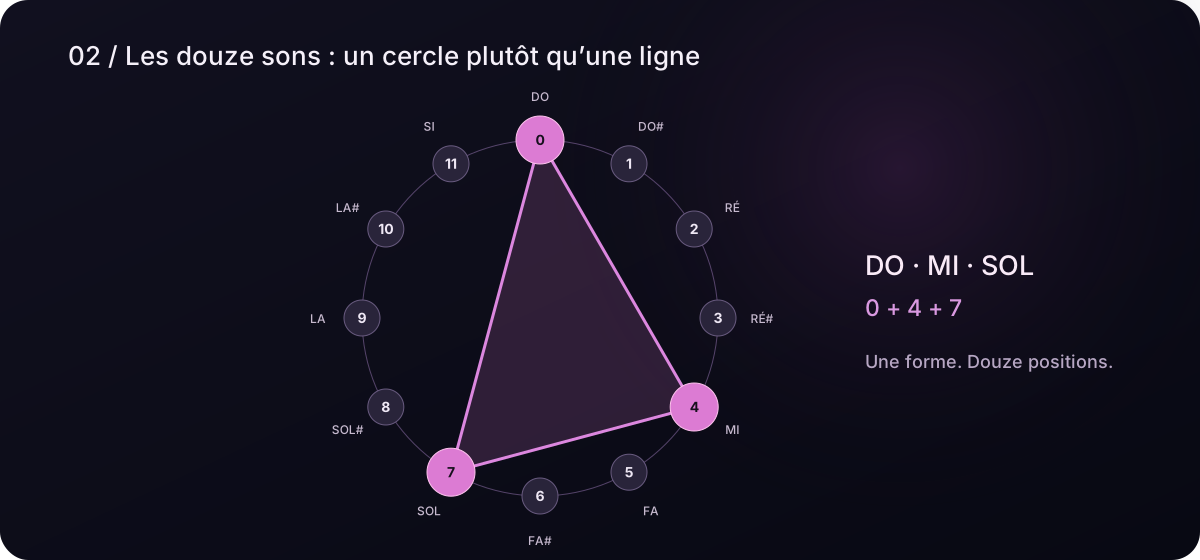
Numbers can become a practical map. C major can be represented as {0, 4, 7}; adding two semitones produces {2, 6, 9}, D major. After 11 comes 0 again: this circular calculation is known as modulo 12.
This representation does not replace note names or tonal function. It highlights relationships between shapes that look far apart on the keyboard and makes symmetrical collections, transpositions and transformations easier to explore.
Write C, E and G on a MIDI track. Duplicate the motif, transpose it up two semitones and then five. Listen to what remains unchanged — the interval pattern — and what shifts: register, bass tension and instrumentation.
4. Transposition, inversion and reflection
A melody can be moved to a different starting note, inverted so rising motion becomes falling motion, or reshaped using symmetrical patterns. These transformations preserve some relationships while changing the musical character. They are useful in counterpoint, thematic development and film scoring, where a recognisable motif may need to express several emotions.
Take the ascending three-note motif C–D–E. A transposition might give D–E–F♯; a chromatic reflection around C could give C–B♭–A♭. If the motif represents a character, reversing its contour while keeping its rhythm may turn triumph into doubt, or forward movement into retreat.
Do not confuse a chord inversion, which changes the bass note, with mathematical inversion of pitch classes, which reflects them around an axis. The terminology overlaps, but the operations are different.
5. Messiaen: symmetry as an atmosphere
Olivier Messiaen's modes of limited transposition show how repeating interval structures can create a distinctive harmonic world. Their internal symmetries restrict how many different transpositions are possible. For composers, the lesson is less about memorising theory than discovering how a chosen pitch collection can establish a powerful emotional colour.
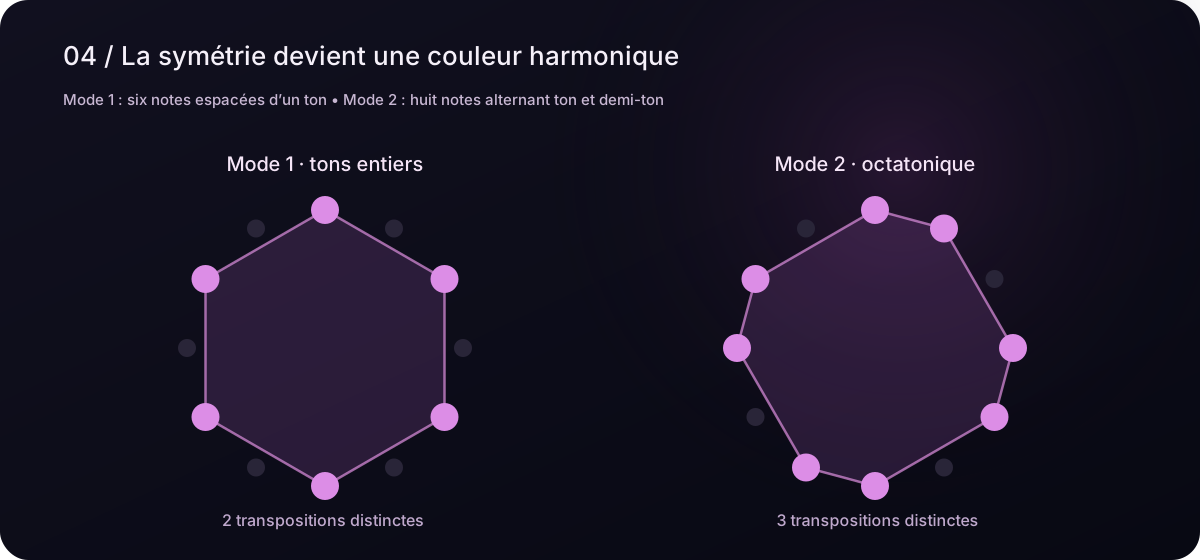
In a whole-tone scale, no single note pulls as strongly toward a tonic as in a standard major cadence. An octatonic mode combines minor-third patterns and chromatic tensions, supporting a shifting, uncanny or solemn atmosphere without forcing an immediate resolution.
For film scores, these modes are reservoirs of colour: melodies, chords, ostinatos and orchestral textures. They do not compose the scene by themselves. Rhythm, timbre, dynamics and orchestration determine their dramatic effect.
Write eight bars in an octatonic mode, give the motif to one solo instrument and sustain two pedal notes in the strings. Change only orchestration and dynamics; the same notes can suggest suspense, expectation or grandeur.
Keep one idea in mind: behind every rule there is a sound to hear. The diagrams and exercises in this feature are invitations to experiment, not mechanical recipes.
6. Rhythm also follows numerical patterns
A sequence grouped 3–3–2 has a very different drive from four identical pairs, even with the same eight subdivisions. Polyrhythm and metric displacement are ways of organising these relationships over time. Small changes in accent or duration can transform the momentum of a cue without altering its tempo or instrumentation.
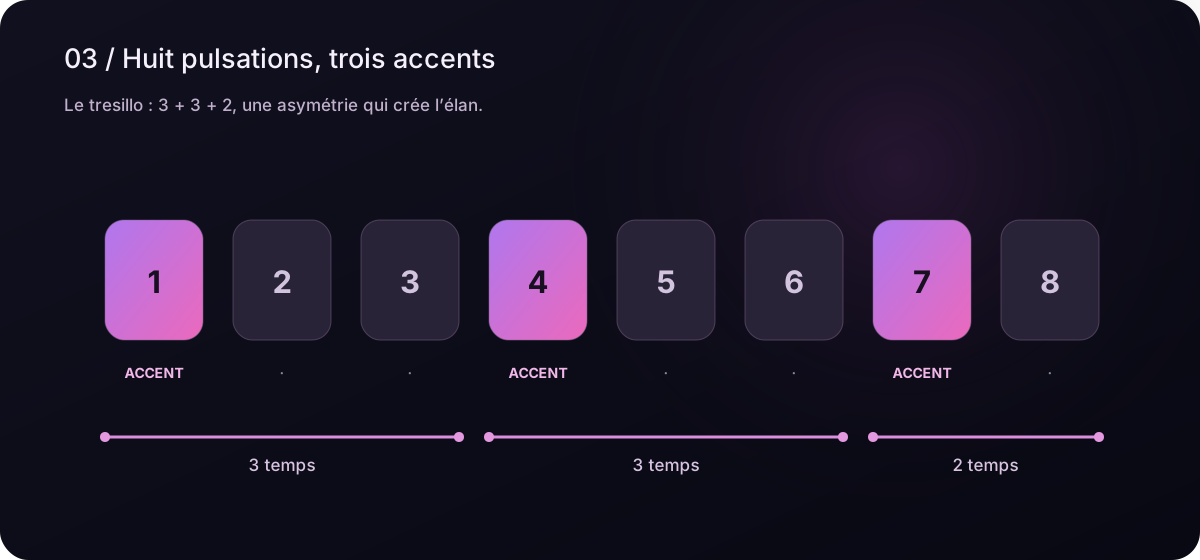
On paper, 3–3–2 is just three numbers. To the ear, the shorter final interval pushes the cycle forward. Over a steady binary pulse, it creates a pattern that is easy to remember yet lively and slightly off-centre.
Mathematics can describe attack positions across a cycle, but it is not a universal groove button. Human timing, accents, note lengths, silences and touch remain essential. The patterns are simply useful starting points for ostinatos, polyrhythms and loops that avoid mechanical repetition.
7. Chords as spaces: understanding the Tonnetz
The Tonnetz connects pitches and triads according to relationships such as fifths and thirds. It offers a spatial way of visualising harmonic movement and voice-leading. For musicians who think visually, this can reveal neighbouring chords and unexpected progressions that still retain common tones.
For composers, the practical benefit is smooth voice leading. C major (C–E–G) moves to E minor (E–G–B) while keeping E and G; only C moves to B. E minor then moves to G major (G–B–D), retaining G and B. Harmony evolves even though most voices barely move.
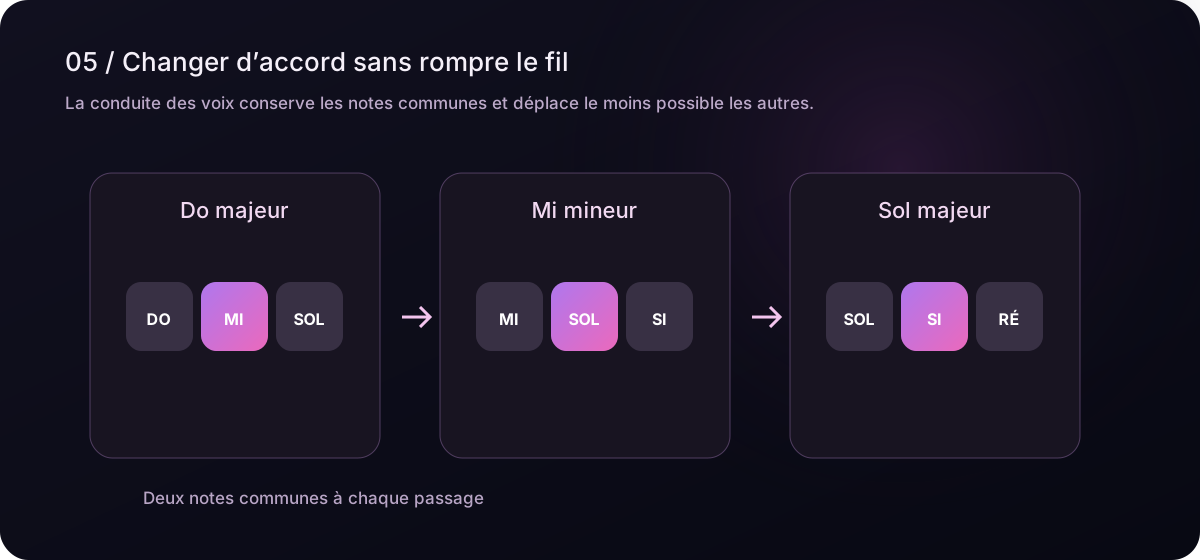
This approach works particularly well with synth pads, strings and choirs. Listeners hear continuity while the harmonic colour changes, making it possible to accompany a character's subtle psychological shift without an abrupt chord change.
8. From manuscript to piano roll
The mathematics is already present in MIDI editing, grids, note divisions, quantisation and modulation patterns. DAWs turn abstract proportions into editable musical gestures. Used with care, these tools help composers test ideas quickly, but mechanical regularity should not erase phrasing or the expressive timing of a performance.
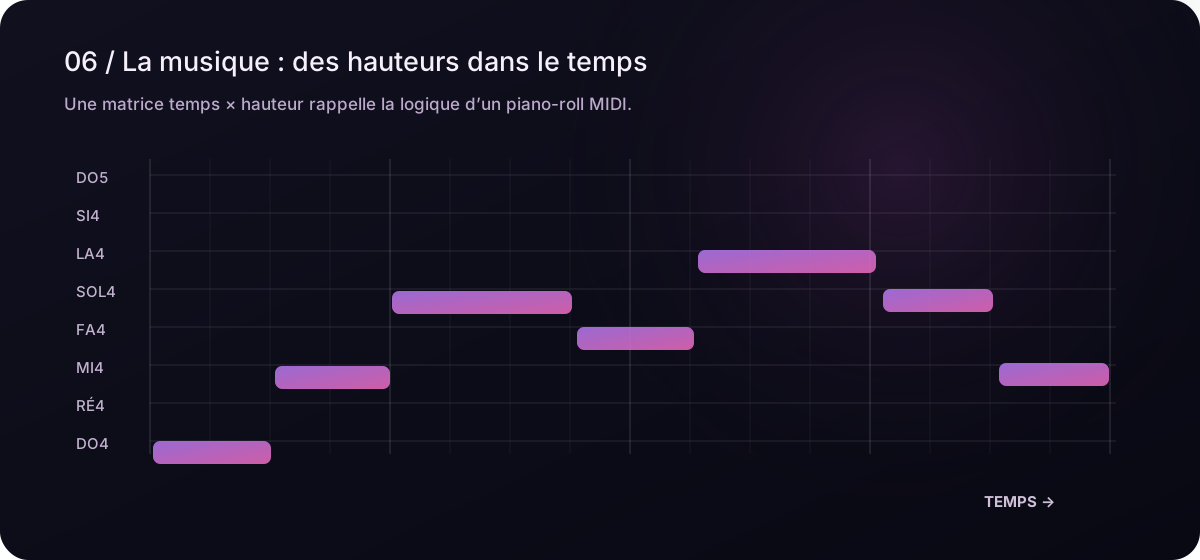
These ideas appear in algorithmic composition, motif generators, arpeggiators and some AI tools. But a catalogue of possibilities is not an artistic proposal. Choosing to retain a dissonance, postpone an entrance or leave silence belongs to musical intention.
9. A twenty-minute composition exercise
Choose a short motif, transpose it, invert its contour and place it over contrasting rhythmic patterns. Listen to each version and notice which intervals or gestures preserve the identity of the idea. Then orchestrate two versions differently. The purpose is to transform an abstract principle into something you can hear and use.
- Choose a seed. Write three notes on guitar or keyboard and find a natural rhythm.
- Transform it. Transpose the motif, invert its contour and experiment with a wider register.
- Limit the pitch palette. Choose a whole-tone or octatonic mode and remain in one transposition for eight bars.
- Build motion. Write a 3–3–2 ostinato over eight subdivisions and place it under the motif without accenting everything.
- Let the harmony breathe. Find three chords that share two notes between successive changes. Alter the timbre before changing the pitches.
- Forget the method for a minute. Listen with closed eyes. Remove what adds nothing emotionally, however clever the construction.
The aim is not a mathematical demonstration but a musical idea you can call your own. Theory has done its job when it opens paths you would not have found through habit alone.
10. What mathematics cannot explain
Numbers reveal relationships, but they do not determine meaning or taste. The emotional effect of music also emerges from memory, performance, culture, storytelling and personal experience. Mathematics can offer composers new possibilities; it remains a tool in the service of imagination.
Music theory becomes truly useful when it remains subordinate to listening. Understanding symmetry reveals possibilities within a scale; harmonic proximity helps shape progressions; overtones inform choices of timbre and arrangement. But the ear has the final say.
For film composers in particular, the key lesson is that structure supports a dramatic intention — it should never replace it.
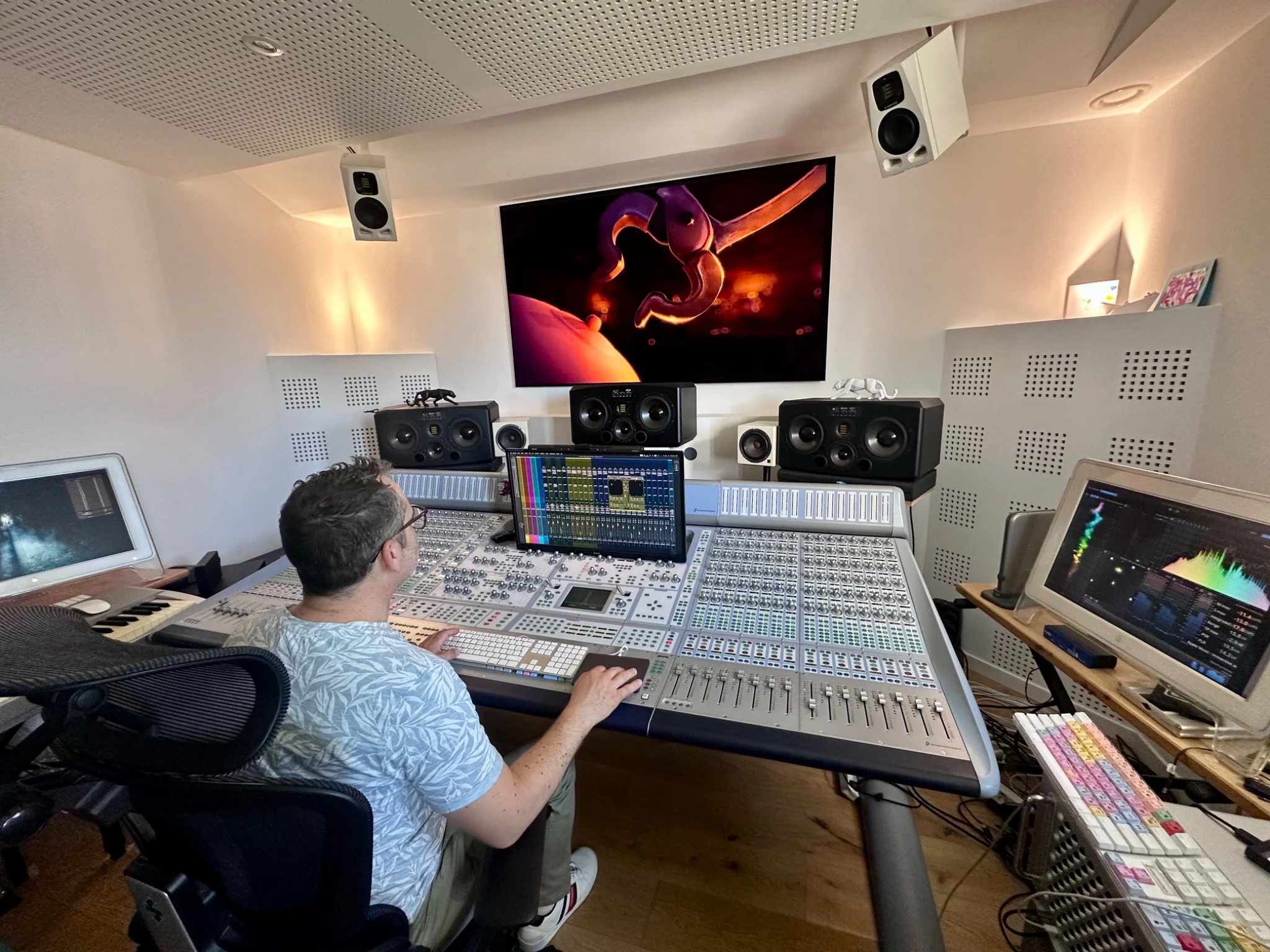 STUDIO 2.0 · ONE-TO-ONE TRAININGA different approach to composing for picture.Personalised, one-to-one training in a working studio specialising in music and sound for picture.EXPLORE THE COMPOSER TRAINING