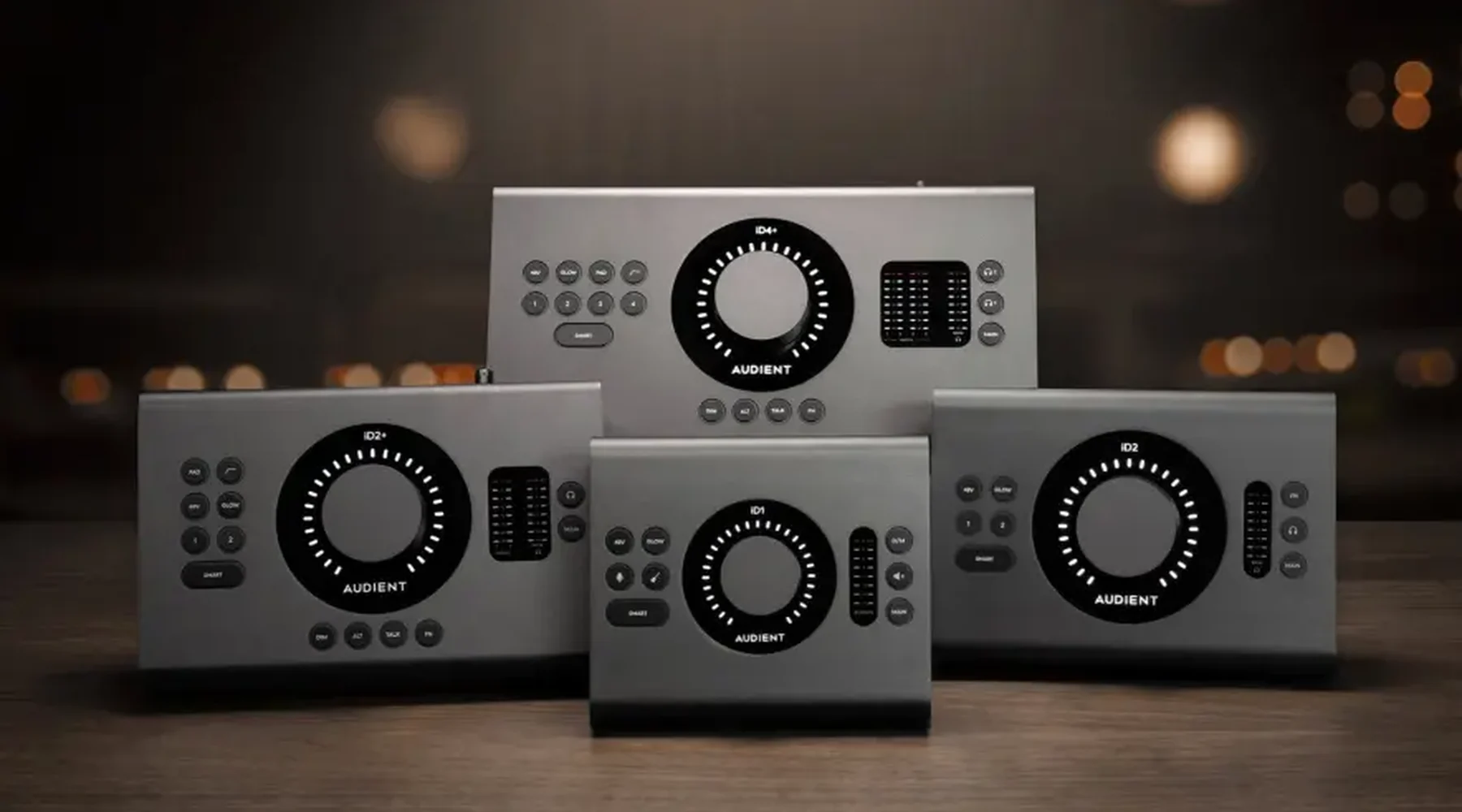
Audient preamps, 32-bit conversion, RoomTune monitoring correction and ADAT connectivity: the new iD MK3 line asks important questions about everything before and after the DAW.
Four interfaces for four different studios
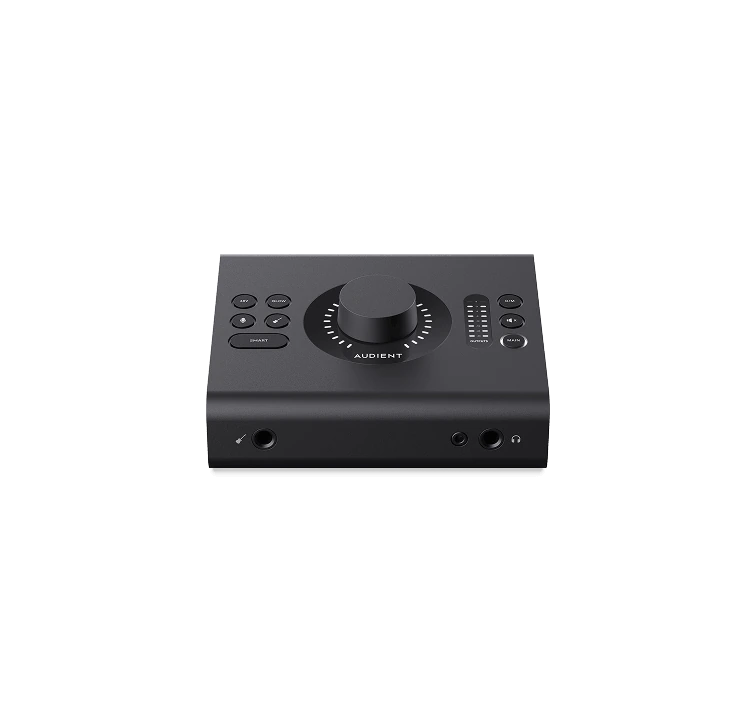
Audient has refreshed its iD Desktop line with the iD1, iD2, iD2+ and iD4+. All four share a common engineering foundation, while their input and output configurations target different workflows: a solo musician, a compact production desk, a hybrid studio using analogue inserts, or a system with more channels. A sensible approach: the number of sockets should not define the quality of sound.
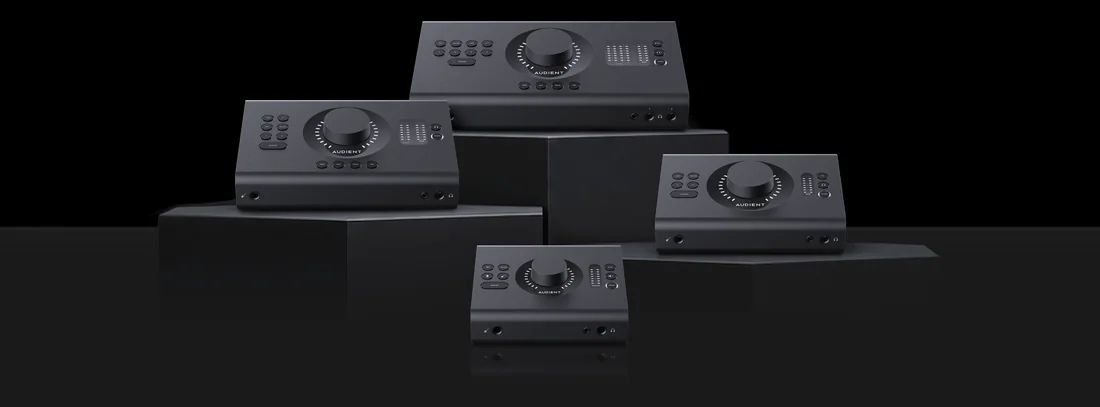
The iD1 offers one Audient microphone preamp and a JFET instrument input. The iD2 brings two mic preamps and ADAT input expansion; the iD2+ adds ADAT input and output plus two hardware inserts; the iD4+ features four mic preamps, sixteen ADAT channels in each direction and two inserts. The available channels still depend on sample rate and the optical configuration.
Why we start with the converters
In digital production, analogue-to-digital conversion defines what actually reaches the session; digital-to-analogue conversion and the monitoring path influence every decision made afterwards. Audient specifies 32-bit conversion and up to 128 dB of dynamic range. Encouraging figures, but a datasheet cannot tell us exactly how a converter behaves in a real room.
Linearity, noise, distortion, drivers, operating levels, available headroom and monitor control all matter. Even an excellent converter cannot rescue an unsuitable microphone, a poor recording or an untreated room; it should simply avoid becoming the weak link in a carefully designed signal path.
Console preamps, DSP tools and room correction
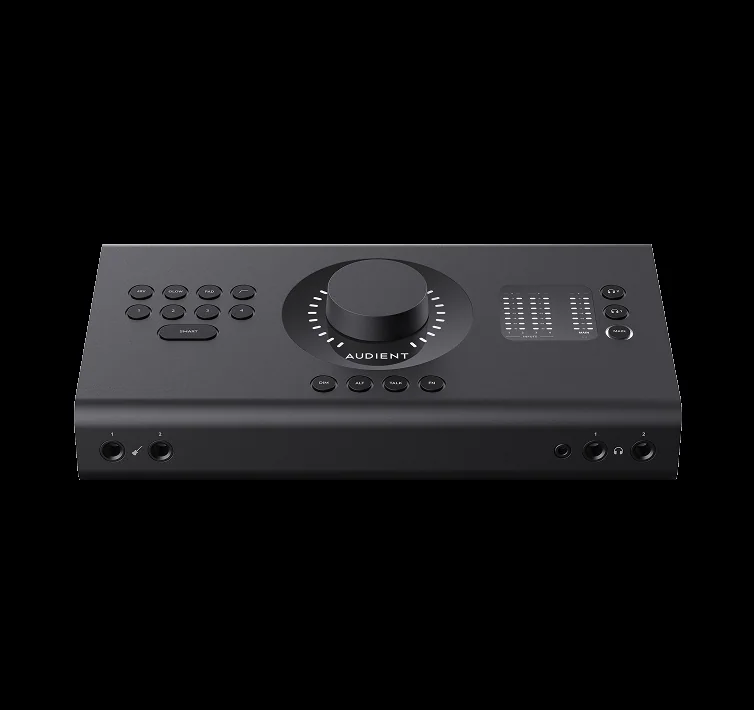
The interfaces retain Audient console-derived analogue preamps and introduce a system Audient calls Analogue Intelligence. Its Analogue Tone Suite offers ORBIT, HMX, LIFT and GLOW colour options; built-in DSP also supplies EQ, compression and reverb. These may be useful for a performer’s monitoring mix and for assessing a sound quickly.
RoomTune monitoring correction is perhaps the most intriguing addition. Electronic correction cannot eliminate physical room modes or timing problems, but correctly measured and applied correction may complement proper acoustic treatment and make comparisons more dependable.
Our EVO 16 and Prism Sound Orpheus workflow
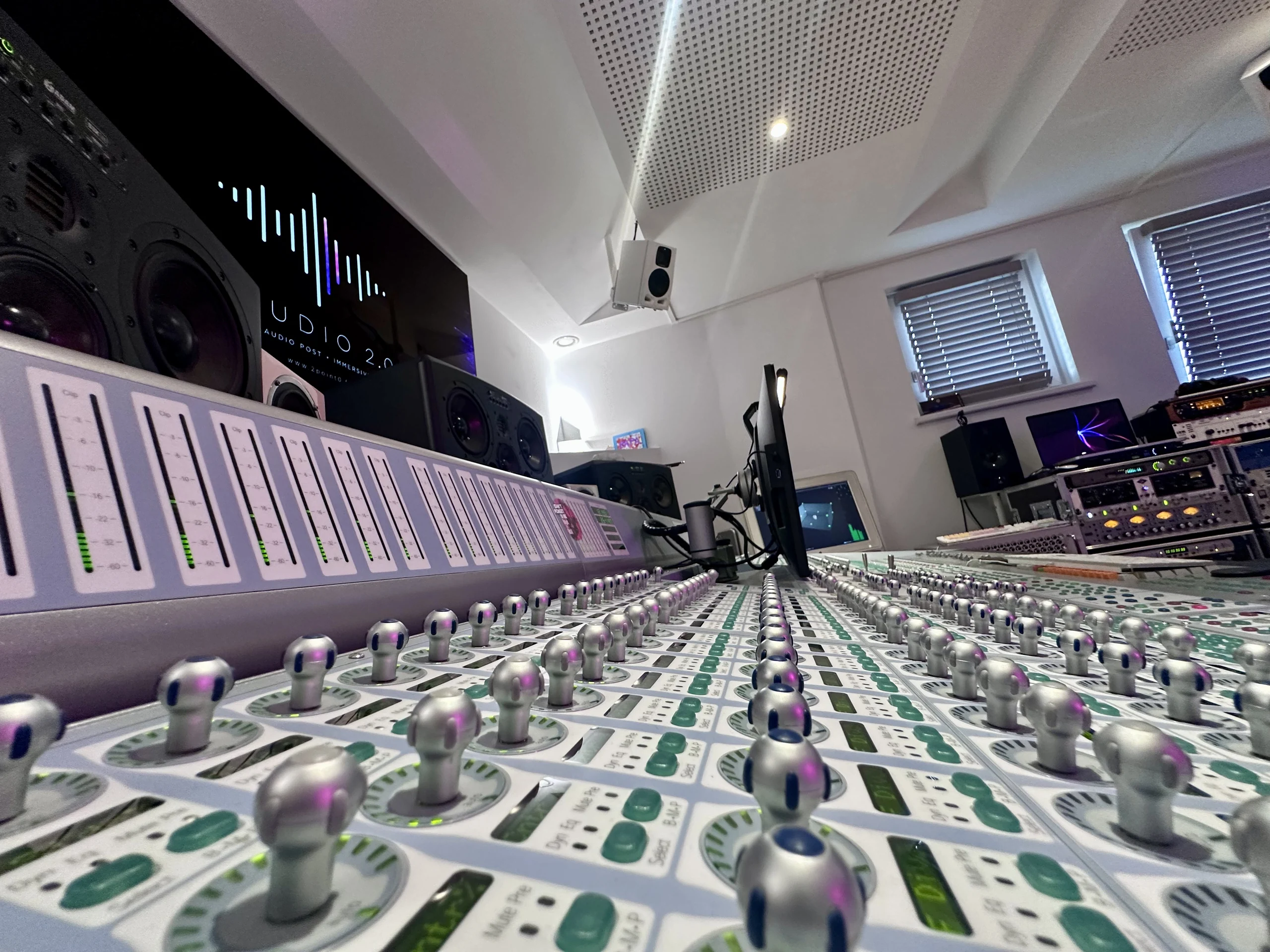
At STUDIO 2.0 we regularly use Audient interfaces and microphone preamps. We also have an EVO 16 that lets us keep our Prism Sound Orpheus converter in service through an ADAT optical connection. This is why flexible digital I/O matters: an interface upgrade should not force us to retire a converter whose sound and behaviour we know well.
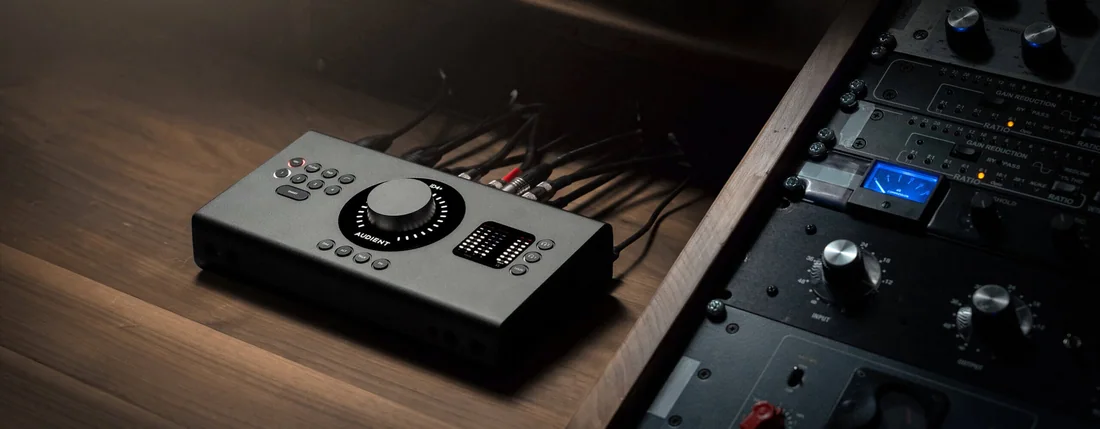
Clocking, optical routing, sample-rate formats and gain consistency become vital when several devices share a signal path. Adding channels is useful only if the complete system remains repeatable from one session to the next.
How we would test the new range
We would like to compare identical sources through different conversion paths: spoken and sung voice, acoustic guitar, piano, drum transients and calibrated reference material. Level-matched captures and blind listening would say much more than switching between interfaces at different playback volumes.
Real-world latency, Pro Tools driver stability, headphone noise, mixer usability and ADAT interoperability would also be part of the evaluation.
Implications for music and film sound
Converters matter at the first recording stage, but their contribution continues throughout editing, mixing and delivery. When we prepare original music, dialogue and sound effects for stereo, surround or Dolby Atmos, dependable monitoring makes decisions about tone, dynamics and space much easier to trust.
A separate Studio 2.0 Magazine feature will look more closely at conversion principles, meaningful measurements and what can actually be heard, rather than relying on impressive marketing numbers.
Our studio perspective
The new range is moving in a direction we welcome: familiar preamps, flexible expansion and greater attention to monitoring. We have not yet tested the MK3 interfaces and cannot claim that they outperform the previous generation or our Orpheus. Hearing and measuring the actual converter and analogue stages is what interests us most.
Key takeaways
Four models for different workflows, useful ADAT options, ambitious monitoring correction and promising specifications. Real listening and measurements must still establish their sonic performance.
Explore our production and mixing services · Explore our one-to-one training
Detailed presentation on the brand’s official website.
 STUDIO 2.0 · PROFESSIONAL TRAININGTake your mixing skills further.Tailored, individual training on real studio equipment, from stereo and surround to Dolby Atmos.ONE-TO-ONE TRAININGEXPLORE ALL TRAINING